A lockout tagout station that’s hard to reach, poorly lit, or buried behind equipment is a station that doesn’t get used properly. In a high-pressure maintenance situation, workers take the path of least resistance. If the path of least resistance is skipping a step, eventually someone gets hurt.
Placement isn’t an afterthought. It’s part of the system.
Here’s how to think through station placement so your LOTO program works the way it’s supposed to.
Start With the Energy Source, Not the Station
The most common mistake in LOTO station planning is starting with where the station is convenient to install and working backwards. The right approach is the opposite – start at the energy source and plan outward.
Every isolation point on your site should have its associated LOTO equipment within immediate reach. That means a worker isolating a piece of equipment should be able to complete the full procedure – apply isolation, apply hasp, apply padlock – without walking to another location to retrieve equipment.
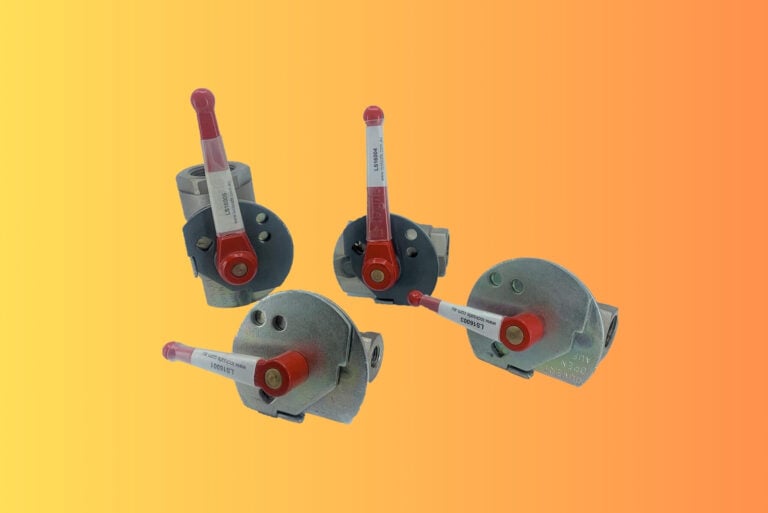
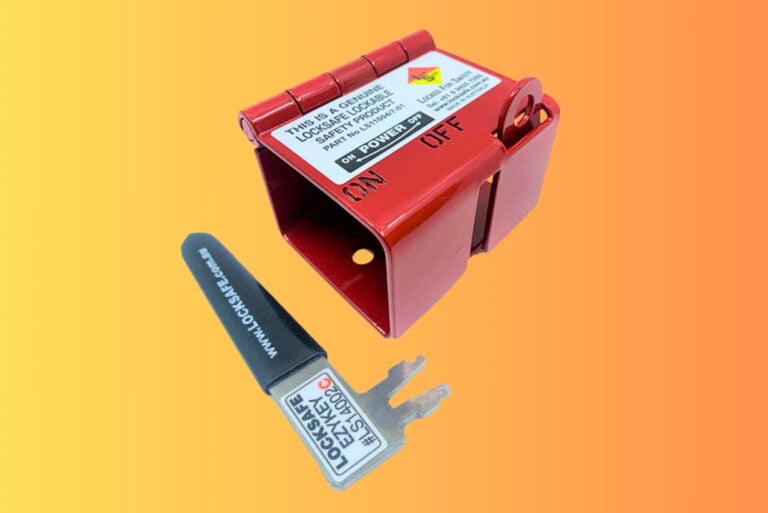
This matters most in mobile plant environments. On a mine site where a haul truck or dozer is being serviced, the battery isolation switch needs a locking bracket that’s right there on the machine. Locksafe’s locking brackets are designed to fit Cole Hersee, Hella, and Bosch switches and can be installed without removing switches and cables in most cases – which means retrofitting them to existing machines is straightforward.
If the equipment and the lockout hardware are in the same place, the procedure gets done. If they’re not, it often doesn’t.
The Five-Metre Rule
A useful practical guideline: a worker should be able to see the isolation station from the point of isolation and reach it in five metres or fewer. In most workshop and fixed plant environments, this is achievable with proper planning.
For fixed plant – crushers, conveyors, pumps, compressors – this typically means mounting isolation cabinets or stations directly adjacent to the equipment they serve rather than in a central location that covers multiple machines. A central cabinet might seem efficient, but it creates a scenario where workers are crossing active areas to retrieve equipment, which introduces its own risks.
Locksafe’s isolation cabinets are manufactured from stainless steel built for mining conditions. They’re designed to be positioned at the machine, not in the supervisor’s office. The in-house design capability also means cabinet configurations can be built to suit specific equipment layouts – important when you’re working around non-standard installations.
Height and Ergonomic Positioning
Station height affects both accessibility and compliance. AS/NZS standards and most site procedures specify that isolation equipment should be accessible to all workers who may need to use it. In practice, that means mounting between 900mm and 1500mm from the ground – accessible without crouching or reaching overhead, and visible without having to search.
In mobile plant applications, this is where mounting options matter. Locksafe provides a range of mounting solutions to assist with installation of isolation units on machinery. The position of a battery isolation switch and its locking bracket needs to be consistent across a fleet where possible – a fitter who works across ten machines shouldn’t have to hunt for the isolation point on each one.
Standardised positioning across a fleet reduces errors and speeds up the isolation process. Both outcomes reduce risk.
Visibility in Poor Conditions
Mining and construction environments often involve dust, low light, and noise. A station that’s easy to find in a clean workshop at midday may be genuinely hard to locate underground, in a pit during a night shift, or inside a dusty equipment bay.
Colour coding helps here too: a consistent scheme lets a worker find their own lock at a glance even in poor visibility, and our guide to colour coding your isolation locks covers how to set one up.
Beyond padlock colour, the station itself needs to be visible. Stainless steel cabinets with clear labelling and consistent positioning become instinctive to locate over time – which is exactly what you want when someone is working under time pressure.
Multi-Energy Source Situations
Some equipment has more than one energy source. A machine might have electrical isolation, hydraulic stored energy, and pneumatic systems that all need to be addressed before work begins. If those isolation points are in different physical locations, it increases the chance that one gets missed.
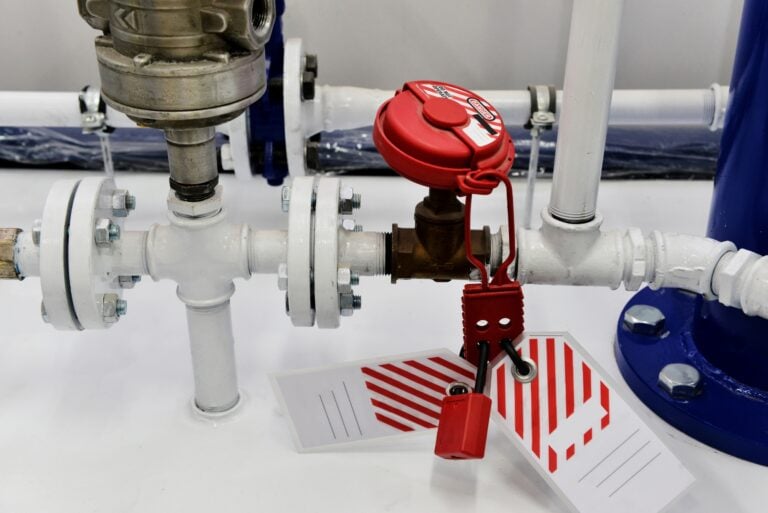
Where possible, plan station placement so that a single location – or a clear sequential path – covers all energy sources for a given piece of equipment. This is where hasps become important. A multi-lock hasp allows multiple workers – or the isolation of multiple energy sources – to be controlled at a single point. Locksafe’s scissor hasps and tamper proof hasps are designed for exactly this and can be customised to suit specific site requirements.
If a machine genuinely has isolation points that can’t be co-located, the procedure documentation needs to reflect the sequence clearly, and the station placement should guide workers through that sequence logically.
Group Lockout Situations
On larger shutdowns or maintenance tasks involving multiple trades, group lockout procedures require more hardware than a single-person isolation. Each worker applies their own lock. On a job with ten people, that means ten padlocks on the hasp, all of which need to be removed before power is restored.
Plan station capacity for these scenarios. A cabinet positioned for day-to-day single-person isolations may not have enough hasp capacity for a major shutdown. Locksafe’s isolation cabinets can be configured to suit the scale of your operations – something worth considering at the planning stage rather than realising the cabinet is undersized when a shutdown is already underway.
Lockout bags from the Locksafe specialty range are another practical option for group lockout and mobile applications – they allow workers to carry their own isolation equipment to the point of work, which matters when maintenance tasks move around the site rather than being fixed at one location.
Document the Placement Decisions
Once station locations are determined, document them. Photographs, site maps with marked locations, and equipment-specific LOTO procedures that reference the station position by location – all of this makes the placement decision durable.
People change. Sites change. Equipment gets moved or added. If the placement rationale lives only in someone’s head, it doesn’t survive long.
Placement documentation also supports auditing and compliance review. When a regulator or your safety team is assessing whether your LOTO program meets requirements, being able to demonstrate that placement decisions were deliberate and considered – rather than wherever was convenient at the time – is a meaningful advantage.
Review Placement After Incidents and Near Misses
Any LOTO-related incident or near miss should prompt a review of station placement as part of the investigation. In many cases, the procedure itself was sound, but the physical arrangement made compliance harder than it needed to be.
Placement is not a one-time decision. Sites evolve, equipment configurations change, and what worked three years ago may no longer be optimal. Building placement review into your periodic safety audits keeps the physical setup aligned with how work is being done.
Locksafe designs and manufactures isolation cabinets, locking brackets, hasps, padlocks, and specialty lockout products for the Australian mining and construction industries. All products are Australian made and built for operational environments.
View the full product range or contact the Locksafe team to discuss your site requirements.