


In a perfect world, safety equipment would stay clean, dry, and stationary. But in the real world of Australian mining, oil and gas, and heavy manufacturing, your mounting systems are constantly battling the elements. From the vibrating chassis of a haul truck to the salt spray of a coastal site, the environment is always trying to rattle, rust, or rot your gear.
If your mounting system fails, your isolation protocol fails with it. Here is what you need to keep in mind when choosing mounting solutions for the toughest conditions on site.
1. Vibration Resistance
In heavy industry, vibration is a constant. Constant movement can lead to “fastener fatigue,” where bolts slowly back out or brackets develop stress fractures. A standard wall bracket simply won’t last on a piece of mobile plant.
You need mounting systems specifically engineered for high-vibration environments. Look for heavy-duty base plates and secure locking mechanisms that won’t jiggle loose over a twelve-hour shift. If the mount is rattling, it is only a matter of time before the equipment it is holding becomes a hazard itself.
2. Corrosion Protection and Material Choice
Australia’s climate is brutal on metal. Between high humidity, coastal salt, and chemical exposure in processing plants, standard steel brackets can turn to rust in a single season.
When choosing mounting options, look for materials that can take a punch. Powder-coated finishes, stainless steel, and specialised alloys are the gold standard. These materials create a barrier against oxidation, ensuring that your mounting plates stay structural and your isolation switches remain easy to operate.
3. Extreme Temperature Stability
We often talk about the heat in the Pilbara or the humidity in Queensland, but extreme temperatures affect the “fit” of your equipment. Metals expand and contract, which can cause mounting holes to warp or brackets to bind.
A good mounting system needs to account for this thermal movement. It should provide a snug fit for your lockout devices without becoming impossible to remove when the temperature hits 45°C.
4. Accessibility vs. Protection
It is a fine balance. You want your lockout equipment protected from dust and grease, but you also need it to be accessible in a split second.
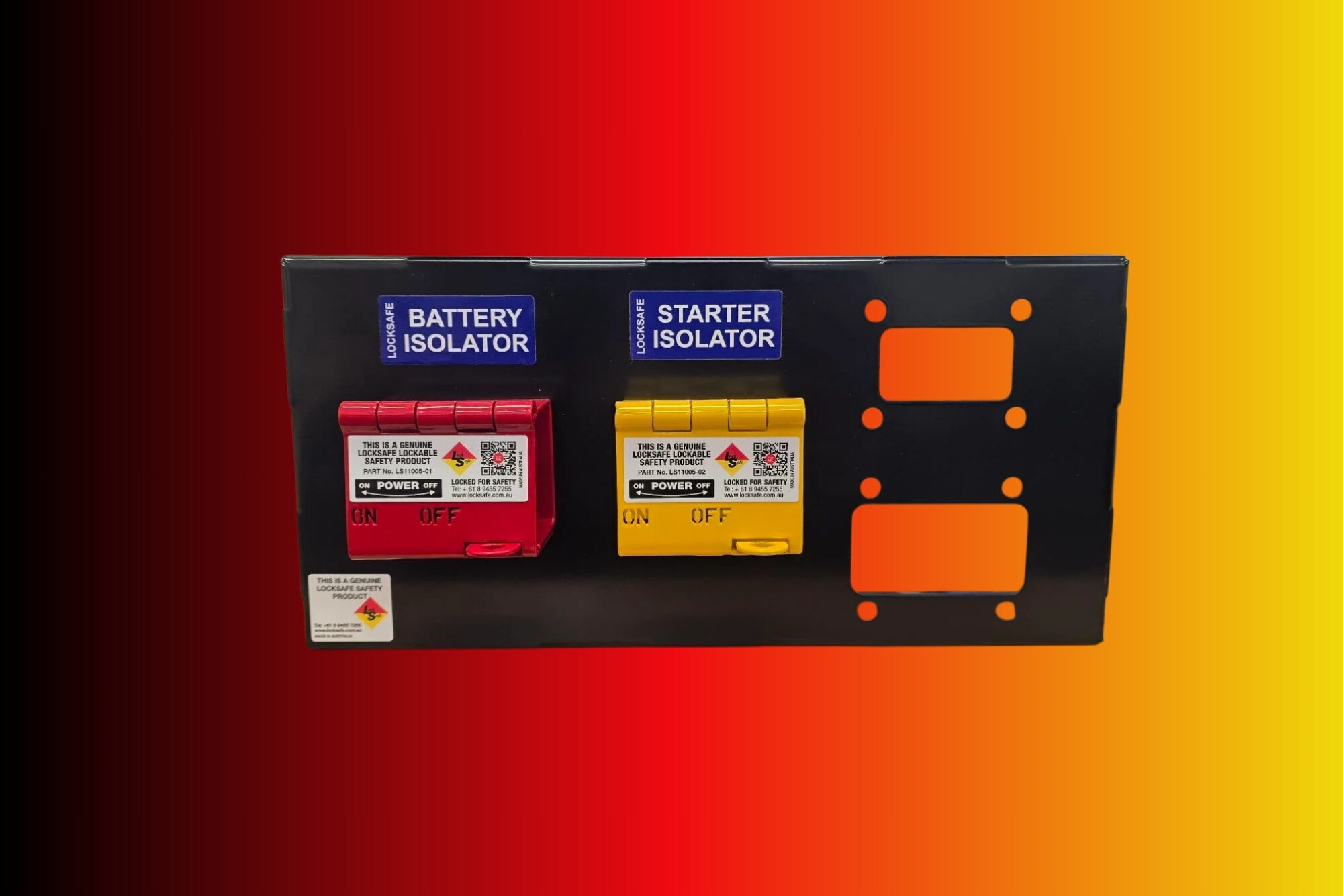
In harsh environments, mounting systems often include “top hat” designs or protective plates that shield the sensitive parts of an isolator from falling debris while still leaving the handle clear for the operator. If your team has to fight with a greasy, stuck, or buried mounting bracket to perform a lockout, they are more likely to take shortcuts.
5. Standardisation Across the Fleet
The “harsh environment” isn’t just the weather, it is the complexity of the machinery. One of the biggest mistakes we see is using five different types of mounts for five different vehicles.
Using a consistent mounting system across your fleet or facility means your crew knows exactly where to look and how to use the gear, regardless of which machine they are working on. It simplifies maintenance and makes it easier to spot when a bracket has been damaged or tampered with.
Get Expert Advice for Your Site
At Locksafe, we design our gear to survive the exact conditions your team works in every day. Whether you are dealing with underground dampness or open-cut dust, we can help you find a mounting solution that actually lasts.
If you have questions about which plate is right for your specific equipment, you can reach our team directly on (08) 9455 7255.
If you would prefer to send us photos of your current setup for a recommendation, feel free to get in touch via our contact page.


