If you’re specifying battery isolation switches for mining equipment or heavy plant, you’ve probably come across two amperage ratings listed side by side. One’s higher, one’s lower, and the difference matters more than most people realise.
Get it wrong and you’re looking at a switch that fails under load, overheats, or trips at exactly the wrong moment. Out in the field, mid-shift, on a piece of equipment that needs to be operational.
Here’s what those two ratings mean and how to use them when selecting isolation equipment.
What Is Continuous Amperage?
Continuous amperage (sometimes called continuous current rating) is the maximum current a switch can safely carry for an indefinite period without overheating or degrading.
Think of it as the steady-state load. The alternator charging, the ECU running, lights on, compressors ticking over. That’s continuous draw. If your equipment draws 200A under normal operating conditions, you need a switch rated for at least 200A continuous.
Undersizing here is where isolation switches fail. The switch doesn’t blow immediately. It heats up gradually, the contacts degrade, and eventually it either fails to isolate properly or welds itself closed under load.
What Is Intermittent Amperage?
Intermittent amperage is the higher current a switch can handle for short bursts, typically measured over a defined cycle, often 5 minutes on, 5 minutes off, or similar intervals specified by the manufacturer.
This covers starting loads. Starter motors on large diesel equipment can draw 800-1,200A for 10-15 seconds. Hydraulic pump startup, crane slew, heavy dozer blade articulation. These all create current spikes that far exceed the equipment’s continuous draw.
The intermittent rating tells you the switch won’t be destroyed by those spikes, provided they stay within the defined duty cycle.
Why Both Ratings Matter
Here’s where people get caught out. A switch rated 500A intermittent sounds impressive. But if its continuous rating is only 150A and your equipment draws 200A at idle, you’ve already exceeded the spec before the engine even loads up.
On the other side, some operators over-specify the continuous rating to feel safe, then end up with a physically oversized switch that doesn’t fit the installation point, or costs significantly more than the application requires.
The right approach is straightforward:
Step 1: Calculate your continuous load: everything running at normal operating conditions. Add a 20% safety margin.
Step 2: Identify your peak intermittent loads: starter motor draw, hydraulic activation, any large inductive loads.
Step 3: Match both figures to the switch rating. Both need to be covered, not just one.
Heavy Equipment: Why This Gets Complex
Mining and construction equipment doesn’t behave like a car. A haul truck alternator might put out 350A. Add cab climate control, payload monitoring systems, lighting arrays, onboard diagnostics. Continuous draw climbs fast.
Then factor in the starting circuit. Large diesel engines with pre-heat systems can spike well above 1,000A at crank. If your isolation switch is in the main battery circuit (which it should be for proper energy isolation), it’s seeing all of that.
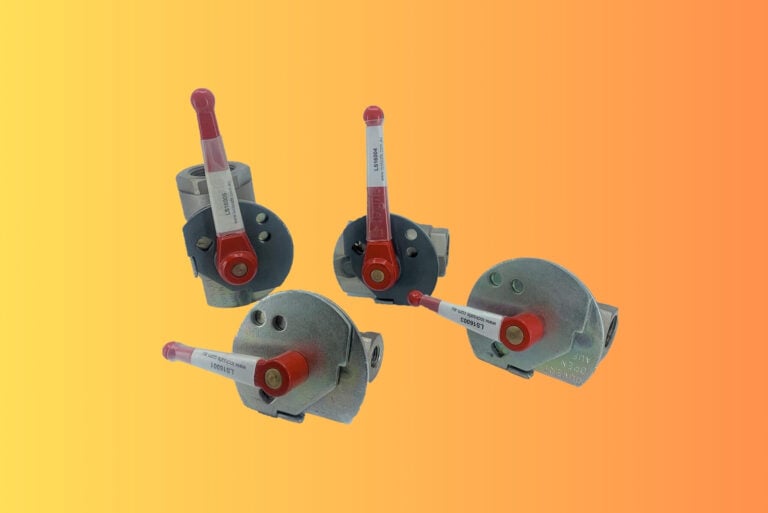
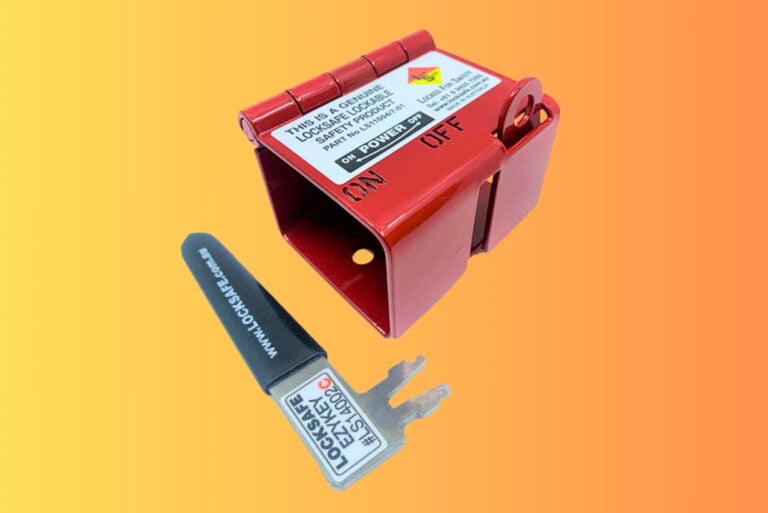
This is why Locksafe’s locking brackets are designed for use with heavy-duty isolation switches from Cole Hersee, Hella, and Bosch: brands that publish accurate, tested amperage specs for both continuous and intermittent duty. You know what you’re actually getting when you spec the installation.
Thermal Management and Contact Degradation
Something worth understanding: the damage from overloading isn’t always visible immediately.
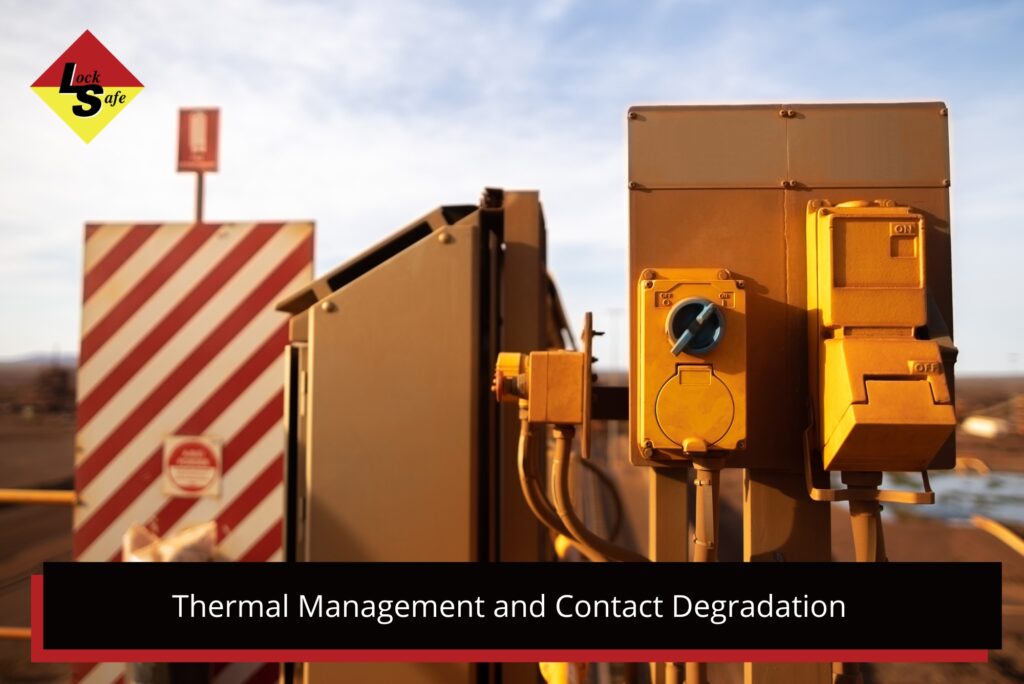
When a switch carries more than its continuous rating, the contacts heat up. Over time, that causes oxidation and pitting. The resistance across the contacts increases. That higher resistance generates more heat under the same load. It’s a cycle that compounds until the contacts either weld or fail open.
In a correctly specified and installed isolation switch, the contacts stay clean, the resistance stays negligible, and the switch works reliably for years. In an undersized one, you might get 12 months of operation before it starts causing problems. By then, it’s hard to trace back to the original specification error.
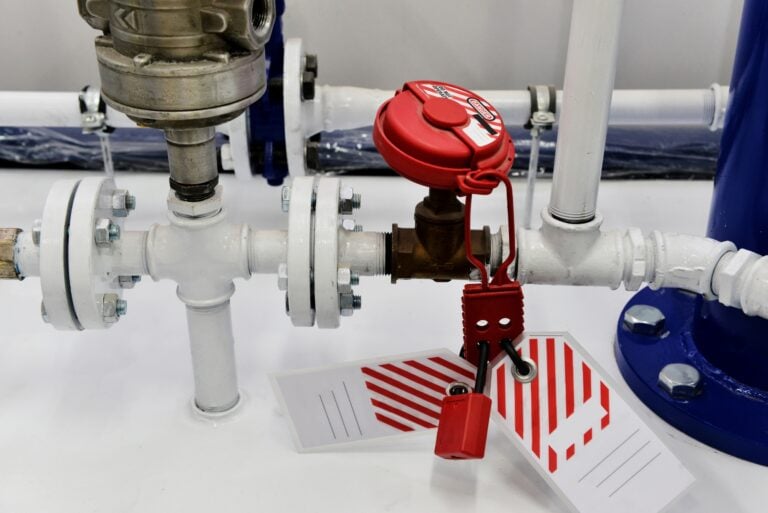
This is one reason proper lockout-tagout equipment matters beyond just safety compliance. A battery isolation switch that’s been thermally degraded doesn’t provide positive isolation. The whole point of locking out a battery circuit is certainty: certainty that the machine is de-energised, that it can’t be inadvertently started, that the person working on it is protected. A failing switch undermines that entirely.
Specifying for Australian Mining Conditions
Australian mining environments add complexity. Temperature extremes in the Pilbara and Bowen Basin push equipment harder. Dust infiltration, vibration, and the sheer scale of machinery mean the margin between “specified correctly” and “close enough” has real consequences.
A few practical points when specifying battery isolation for Australian mine sites:
Temperature derating
Most switch manufacturers publish amperage ratings at 25°C ambient. At 45°C+ ambient (realistic in a Pilbara summer, inside an engine bay), continuous ratings need to be derated. Check the manufacturer’s derating curves.
Cable sizing consistency
The switch is only one part of the circuit. If the cable from battery to switch is undersized, it becomes the weak point. All components in the isolation circuit need to match.
Vibration ratings
Heavy equipment vibration is relentless. Switches and locking brackets need to be rated for the vibration profile of the machine, not just the electrical load.
AS 4024 compliance
Australia’s safety standard for plant and machinery (AS 4024 series) sets requirements for energy isolation. Specifying switches and lockout equipment that meet these requirements isn’t optional on most Australian mine sites. It’s a condition of operating.
The Practical Takeaway
When you’re specifying battery isolation switches, whether for a new machine, a retrofit, or a bulk fleet order, get both amperage figures from the manufacturer and verify them against your actual load calculations.
Continuous rating covers your normal operating state. Intermittent rating covers your peaks. Both need to be adequate. Neither alone tells the full story.
If you’re unsure about the load profile for a specific piece of equipment, Locksafe can work through the application with you. We’ve been doing this across mining and construction for 50 years: BHP, Rio Tinto, Glencore, WesTrac and plenty of smaller operations, so most equipment types aren’t new territory.
Get the spec right at the start. It’s a lot cheaper than tracing intermittent electrical faults on a 785 haul truck at 2am.
Locksafe designs and manufactures energy isolation lockout equipment in Canning Vale, Western Australia. All products are Australian-made and designed for the operational demands of mining and construction environments.