When more than one person needs to work on the same piece of plant, a single padlock on the isolation point isn’t enough. Every worker on the job needs their own lock in place before work starts, and that lock needs to stay in place until they’ve finished and walked away safely. This is where lockout hasps do the heavy lifting, and where the choice between a single point hasp and a multi-point hasp starts to matter.
Get this choice wrong and you end up with a hasp that can’t hold enough locks for the crew on site, or a group lockout system that’s more complicated than the job needs. Here’s how to tell the two apart and match the right hasp to your team.
What Is a Single Point Hasp and When to Use One
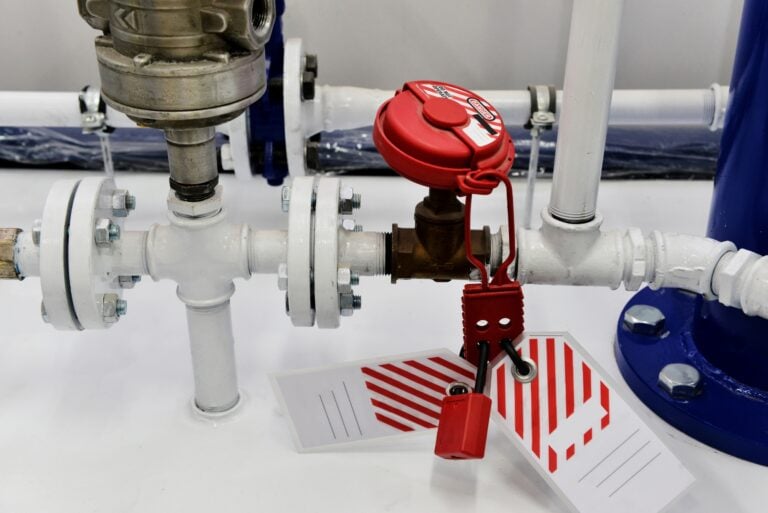
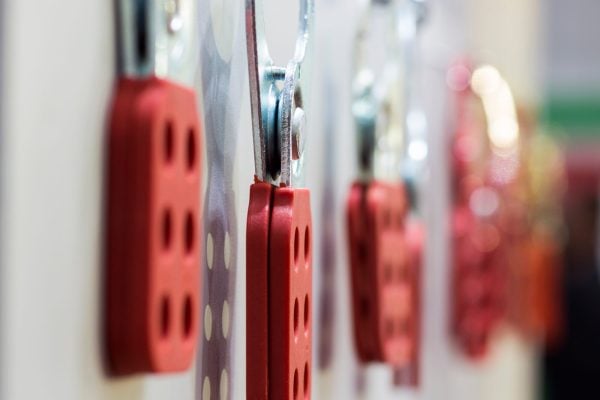
A single point hasp is designed to isolate one energy source at one location, such as a single valve, switch or breaker. The hasp itself usually has several holes around the outer edge, so once it’s fitted over the isolation point, each worker on that job can add their own padlock.
This setup suits jobs where the work is contained to one isolation point but involves a handful of people. A maintenance team servicing a single pump, for example, might have three or four technicians working alongside each other, each needing their own lock on that one point before anyone touches the equipment. A single point hasp with six to eight lock holes handles this comfortably.
The limitation shows up when the crew grows or the job spans more than one energy source. A single point hasp only ever locks one point. If a job needs locks on three valves and a main isolator, you’re now managing four separate hasps, which is where things start to get harder to track and audit. If you’re weighing up how many people one hasp can realistically cover, our guide on how many workers can lock a single hasp at once walks through the practical limits in more detail.
What Is a Multi-Point Hasp and How Group Lockout Works
A multi-point hasp, sometimes used as part of a group lockout box, is built for jobs where several isolation points need to be locked together as one group. Instead of managing a separate hasp at every valve, switch or breaker, each isolation point gets its own lock, and the keys for those locks go into a central group lockout box. Once every point is isolated and its key is secured inside the box, each worker on the job then applies their own personal padlock to the box itself.
No one can open the box, and therefore no one can retrieve the isolation keys, until every personal padlock has been removed. This means the last worker off the job is protected by the same system as the first, regardless of how many people are on site or how many separate energy sources the equipment has.
This structure is what makes true multi worker isolation practical on bigger jobs. A shutdown involving electrical, pneumatic and hydraulic isolation, worked on by a crew of ten or more, would be unmanageable with individual hasps at every point. A multi-point hasp system scales to the crew size without adding hardware at each isolation point every time someone joins or leaves the job. It’s worth checking whether every isolation point on your equipment needs its own lockout device in the first place; our article on whether you need a lockout hasp at every isolation point covers how to assess that for your own plant.
Comparing Capacity, Cost and Compliance
The practical differences between the two come down to three things: how many locks you need, how many isolation points are involved, and how easy the system is to audit.
Capacity is the first consideration. A single point hasp typically holds somewhere between four and eight padlocks, which is plenty for a small crew on one isolation point. A group lockout box, used with a multi-point hasp arrangement, isn’t limited by holes on a single device. It scales with the number of workers, because each person locks onto the box rather than the isolation point directly.
Cost is worth factoring in honestly. A single point hasp is a low-cost item, and for small, single-source jobs it’s the more economical option. A group lockout box costs more upfront, but it removes the need to buy and manage multiple hasps across a multi-point job, and it holds its value as crew sizes change from one job to the next.
Compliance and auditability tend to favour the group lockout approach on anything beyond a simple one or two-person job. Under most site isolation procedures and WHS guidance, the person conducting an isolation audit needs to confirm, at a glance, that every worker’s lock is accounted for. A group lockout box makes this straightforward, because every personal padlock sits in one visible location. Chasing down individual hasps scattered across several isolation points on a large job makes that same audit far more time-consuming and increases the chance something gets missed.
Choosing the Right Hasp for Your Team Size
The decision usually comes down to two questions: how many isolation points the job involves, and how many people will be locking out at once.
For a single isolation point with up to four or five workers, a single point hasp is the simpler and cheaper choice. It’s quick to fit, easy to inspect, and doesn’t require the extra step of managing a lockout box.
Once the job involves more than one isolation point, or the crew grows past what a single hasp can comfortably hold, a multi-point hasp lockout system built around a group lockout box is the better fit. It keeps the process consistent regardless of whether five or fifteen people are on site, and it means adding or removing a worker from the job doesn’t require swapping out hardware.
Some sites run both. Smaller routine maintenance tasks use single point hasps, while shutdowns, turnarounds and multi-trade jobs default to group lockout boxes. Whatever you choose, the system should match your site’s actual isolation procedure and be documented as part of your lockout program, not decided on the fly by whoever’s on shift.
It also pays to plan for growth rather than the job in front of you today. A single point hasp bought for a four-person crew becomes a bottleneck the day a fifth contractor turns up, and swapping hardware mid-job is exactly the kind of gap that isolation audits are designed to catch. Building a small buffer into your hasp or lockout box capacity, and reviewing crew sizes before each major shutdown, avoids that scramble.
Locksafe Hasp Range for Group Isolation
Locksafe stocks both single point and multi point hasps, along with the group lockout boxes that make multi worker isolation manageable on bigger jobs. Our hasp range includes standard single point hasps in multiple sizes, heavy-duty options for outdoor or corrosive environments, and group lockout boxes sized for small teams through to large shutdown crews.
If you’re not sure which setup suits your site, get in touch with our team. We can talk through your isolation points, typical crew sizes and existing procedures, and help you put together a hasp and lockout box combination that keeps every worker properly protected without adding unnecessary complexity to the job.